
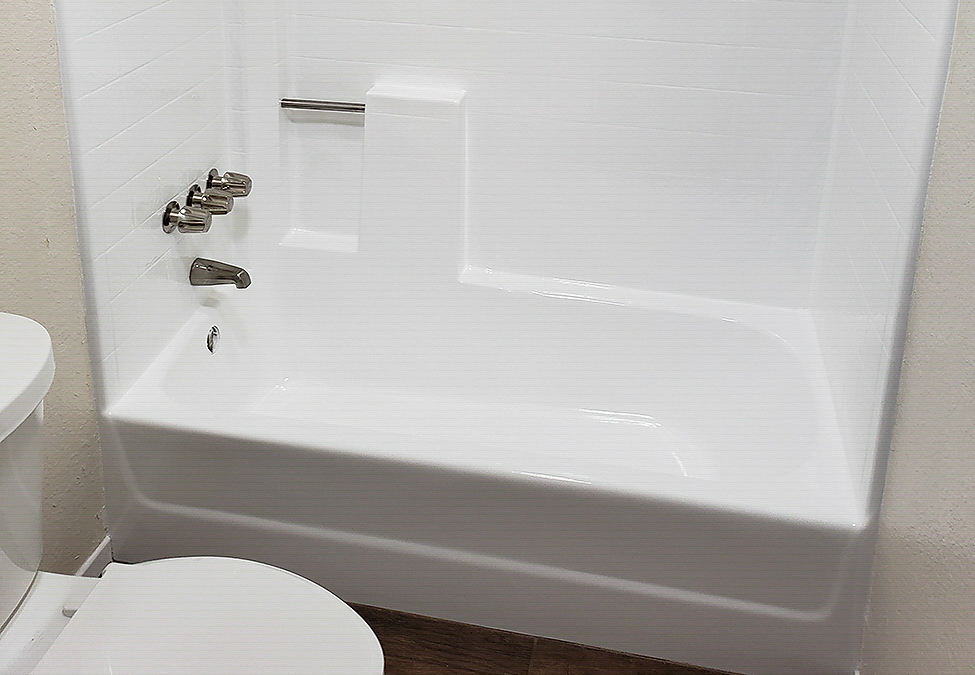
Surface type changes almost everything about a refinishing quote. It matters more than square footage, more than which room the tub sits in, and more than most homeowners expect before they ask for a number.
What affects bathtub refinishing cost by surface type starts with the material underneath the finish. Porcelain, cast iron, fiberglass, tile, and cultured marble all prep differently, and prep time is where most of the variation comes from.
What Actually Affects Bathtub Refinishing Cost By Surface Type
Every refinishing job starts with the same basic steps: clean the surface, repair any damage, etch it so the new finish bonds, then apply the resin and let it cure. What changes between surfaces is how long each of those steps takes and how much repair work shows up once we start.
A tub with heavy staining and a few chips takes longer to prep than one that just looks dated. We build a quote around the actual condition of the surface rather than a flat number, which is why two tubs in the same house can come back with different pricing.
Why Two Bathrooms In The Same House Rarely Cost The Same
A guest bathroom that sees light use ages differently than a primary bathroom used by a family every day. The tub in daily use typically carries more soap scum buildup, more hard water etching, and a higher chance of chips near the faucet from years of bottles and razors sliding around.
We see this constantly in older homes where one bathroom was updated at some point and the other never was. The untouched bathroom almost always needs more prep time, which shows up directly in the quote regardless of the two rooms being the same size.
A secondary bathroom with an original 1970s fiberglass insert can cost less to refinish than a primary bathroom’s porcelain tub down the hall, even in the same house, on the same day. That gap comes down to surface condition and material, not the size of either room.
What Does Not Move The Number As Much As People Expect
The size of the bathroom itself is one of the most common assumptions homeowners bring to a conversation about cost, and it is usually a smaller factor than surface condition. A large primary bathroom with a well-maintained fiberglass tub can prep faster than a small powder room with a heavily stained porcelain sink.
The age of the house alone is not a reliable predictor either. A 1960s home with a tub that was replaced with fiberglass during a later remodel prices differently than the same house would if the original porcelain fixture were still in place. What matters is the surface currently installed, not the decade the house was built.
Porcelain And Cast Iron Tubs Take More Prep Time
Porcelain and cast iron are both older technologies, and the tubs built from them have usually been in service for decades by the time we see them. That means more wear, more rust around chips, and more surface prep before the resin goes on.
Cast iron in particular holds heat and stress differently than lighter materials, so any rust needs full treatment before refinishing starts or it will show through the new surface later. Porcelain tubs with hairline cracks need the crack addressed first, not just cosmetically covered. Both of these add labor time, which is reflected in the final number.
A clawfoot tub adds its own consideration on top of the material itself, since the exterior often needs attention alongside the interior surface. Restoring both sides of a freestanding cast iron or porcelain tub takes longer than refinishing a built-in tub where only the interior is visible.
Fiberglass And Acrylic Change The Cost Picture
Fiberglass tubs and showers are usually newer, which often means less accumulated damage and a faster prep process. Chips still happen, especially around faucets and drain edges, but the flexible nature of fiberglass means repairs bond differently than they do on a rigid surface like porcelain.
Color changes on fiberglass tend to be more straightforward too, since the surface takes the new finish evenly once it is properly etched. Homeowners updating a fiberglass tub or shower often browse our color options as part of that conversation, since a full color change is often bundled into the same appointment as the refinish.
Tile, Countertops, And Cultured Marble Add Their Own Factors
Tile refinishing involves grout lines, corners, and often a mix of tile and surrounding surfaces that all need to be treated as one continuous job. Tile refinishing pricing reflects that complexity more than square footage alone, since a small bathroom with heavily grouted tile can take longer than a larger one with fewer seams.
Countertops bring their own variable: edge profiles, backsplash integration, and whether sinks are undermount or drop-in all affect how much masking and detail work goes into the job. Countertop refinishing and cultured marble surfaces both follow this same logic, where the shape of the surface matters as much as its size.
Cultured marble in particular can look like solid stone while behaving more like a resin composite underneath, which changes how it takes a new finish compared to actual tile or porcelain. We evaluate each material on its own rather than assuming two surfaces that look similar will prep the same way.
How We Build An Actual Quote
We start with an on-site look at the surface rather than a description over the phone. A technician checks for chips, cracks, rust, and the general condition of the existing finish, then factors in how many surfaces are being refinished in the same visit.
Bundling a tub, surrounding tile, and a countertop into one appointment is usually more efficient than three separate visits, and that efficiency can affect the total differently than three individual quotes would suggest. We walk homeowners through what we found and why it changes the number before scheduling a bathtub refinishing appointment.
Photos Help, But They Do Not Replace An Inspection
Homeowners sometimes send photos ahead of time hoping for a rough number, and photos are useful for scheduling purposes. They rarely show the condition underneath a stain or catch a hairline crack the way an in-person inspection does, so we treat photos as a starting point rather than the basis for a final figure.
Getting An Accurate Number For A Huntington Beach Bathroom
Coastal humidity plays a role too. Homes near the water in Huntington Beach see more wear on grout and metal fixtures over time, which can mean more prep on tile and porcelain surfaces than the same job might need further inland.
The only way to get an accurate number is to have a technician look at the actual surface. We do not quote sight unseen, and we do not guess at a number over the phone, because the condition of the surface underneath the finish is what actually drives the cost.
Why We Do Not Quote By Square Footage Alone
A quote based purely on square footage ignores everything discussed above: surface material, prior damage, and how many surfaces are being handled in one visit. Two identically sized bathrooms with different tub materials can land on different numbers even before any repair work is factored in.
Readers can also see how this played out on a recent bathtub refinishing cost breakdown in Orange County for comparison.
Contact 24hour Bath to schedule an on-site look and get a number based on your actual bathroom, not a guess.